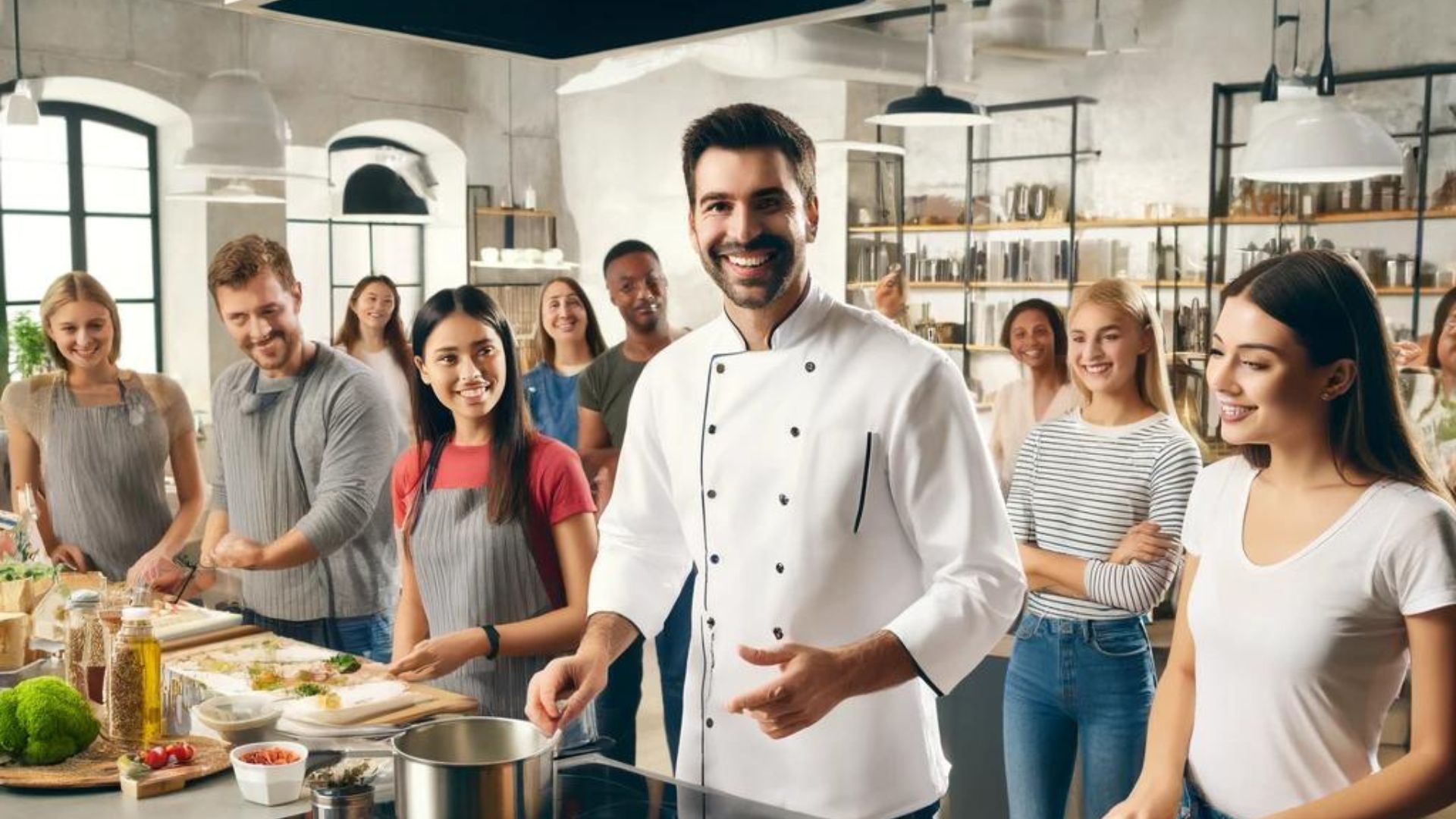


Short Excerpt
- Culinary Institute of America workshops let food enthusiasts learn in professional teaching kitchens through hands-on classes, technique-focused sessions, beverage education, and multi-day Boot Camps.
- Programs can cover everything from knife skills, baking, sauces, and global cuisines to wine, pastry, grilling, and intensive culinary fundamentals.
- The strongest value comes from learning in a professional culinary-school environment with experienced instructors, structured practice, and techniques you can continue using at home.
Quick Take
- CIA workshops are built for food enthusiasts who want more depth than a casual recreational cooking class.
- Options can range from single-day experiences to multi-day Boot Camps and beverage-focused courses.
- Hands-on cooking, baking, tasting, and technique development are central to the experience.
- New York and California offer extensive food-enthusiast programming, with additional public culinary experiences available through CIA’s other campuses.
- Beginners can participate, but some classes are more intensive and technique-driven than typical retail cooking workshops.
- Choose by skill level and learning goal rather than simply picking the most impressive menu.
Step Into a Professional Culinary School and Learn the Techniques Behind the Food
Culinary Institute of America workshops are a strong fit when you want more than a social cooking class and are ready to learn in an environment built around professional culinary education.
The experience is designed for food enthusiasts rather than degree-seeking students, but you still get access to the kind of kitchens, equipment, instructors, and structured teaching associated with one of the best-known culinary schools in the United States.
That difference matters.
A casual class may teach you how to complete one recipe, while a CIA workshop is more likely to emphasize why a technique works, how to repeat it, and how the same fundamentals apply to other dishes.
Depending on the program, you might work on knife skills, sauces, baking, pastry, grilling, global cuisines, wine, flavor development, or a broader set of culinary fundamentals.
Single-day classes work well when you want to sharpen one skill without making a large time commitment.

Multi-day Boot Camps go deeper.
These intensive experiences can immerse you in a particular cuisine, cooking method, or foundational skill set over several sessions, making them especially appealing to serious home cooks who want measurable improvement.
The professional-school setting is part of the attraction.
At the New York campus in Hyde Park, food enthusiasts can take classes in a large culinary campus environment surrounded by teaching kitchens, restaurants, and the broader Hudson Valley food culture.
California programming adds another dimension through Napa Valley locations where cooking, baking, wine, and food-and-beverage education naturally overlap.
The CIA at Copia setting in Napa is particularly appealing if you want to combine a workshop with dining, wine tasting, or a broader culinary trip.

You do not need professional ambitions to benefit.
Many classes are designed specifically for enthusiastic home cooks who want better technique, more confidence, or exposure to cuisines and methods they have not tried before.
Still, the experience can feel more focused and instructional than a date-night cooking class.
That makes choosing the right level important.
A beginner may get more from a fundamentals or introductory workshop, while an experienced home cook might gain more from pastry, advanced technique, wine, or multi-day Boot Camp programming.
The best choice is the one that solves a real weakness in your cooking.
If sauces intimidate you, take sauces.
If your knife work slows everything down, start there.
If you already cook confidently but want to understand wine, baking, or regional cuisine at a deeper level, choose a specialty course instead.
CIA workshops are especially well suited to serious home cooks, culinary travelers, couples who prefer skill-building experiences, food enthusiasts, and anyone who wants to learn in a professional culinary-school setting without enrolling in a degree program.
Someone looking only for a casual social night with minimal instruction may find a lighter recreational class more appropriate.
The Culinary Institute of America: A Premier Destination for Cooking Enthusiasts
The Culinary Institute of America (CIA) stands as a beacon for those passionate about the culinary arts.
Renowned globally, the CIA offers unparalleled culinary education through its campuses in Hyde Park, New York; Greystone, California; and San Antonio, Texas.
Whether you are an aspiring chef or a home cook eager to refine your skills, the CIA’s culinary workshops promise a transformative experience.
Among the most popular offerings are the CIA Boot Camps, which provide an immersive, hands-on culinary adventure that goes beyond traditional cooking classes.
Locations and Facilities: Culinary Excellence Across America
Hyde Park, New York
The CIA’s flagship campus in Hyde Park is set on a beautiful 170-acre property along the Hudson River.
This location is equipped with state-of-the-art kitchens, professional-grade equipment, and a stunning campus that inspires culinary creativity.
The atmosphere here is one of serious culinary study combined with a picturesque setting that enhances the learning experience.
Greystone, California
In the heart of Napa Valley, the CIA’s Greystone campus offers a unique culinary environment.
Surrounded by vineyards and nestled in one of America’s premier wine regions, this location provides an inspiring backdrop for culinary education.
The historic Greystone building itself is a marvel, adding a sense of history and tradition to the modern culinary training offered within its walls.
San Antonio, Texas
Located in the vibrant Pearl District, the CIA’s San Antonio campus combines the rich cultural influences of Texas with top-tier culinary education.
The campus’s emphasis on Latin American cuisines and flavors makes it a unique hub for culinary exploration, blending tradition with innovation in a dynamic learning environment.
Foodie Cooking Essentials
| Kitchen Gadgets | Specialty Ingredients | Dining Essentials | Food Storage |
|---|---|---|---|
| Cuisinart Immersion Hand Blender – Blends soups and sauces directly in pots. | Jacobsen Salt Co. Flavored Salts – Unique salts for seasoning and garnishing. | Marble Cheese Board with Knife Set – Sophisticated serving for cheeses and appetizers. | Reusable Vacuum-Sealed Wine Stopper – Keeps opened wine fresh longer. |
| Anova Culinary Sous Vide Precision Cooker – Ensures precise temperature cooking for gourmet results. | Fly By Jing Sichuan Chili Crisp – A spicy, umami-packed condiment. | Bormioli Rocco Italian Glass Carafe – Elegant water or wine serving vessel. | Progressive ProKeeper+ Set – Specialty containers designed for baking ingredients. |
| Vitamix Explorian Blender – High-powered blending for smoothies, nut butters, and hot soups. | Mina Harissa Moroccan Red Pepper Sauce – A spicy and savory condiment. | Artisanal Handmade Ceramic Bowls – Beautiful and unique for soups or desserts. | PrepWorks Produce ProKeeper – Keeps fruits and vegetables fresh in the fridge. |
| Breville Smart Oven Air Fryer Pro – Combines air frying, roasting, and baking in a single appliance. | Red Boat Premium Fish Sauce – Aged Vietnamese fish sauce for depth of flavor. | Fiesta 3-Piece Bistro Dinnerware Set – Vibrant, durable dishes for casual dining. | Etekcity Digital Food Scale with Bowl – Weighs ingredients directly into the bowl for storage. |
Renowned Chefs and Alumni: Inspiration from the Best
The CIA has been the starting point for many renowned chefs who have gone on to make significant impacts in the culinary world.
Some illustrious alumni include:
- Anthony Bourdain: Known for his adventurous spirit and storytelling, Bourdain’s journey began at the CIA.
- Grant Achatz: A pioneer of molecular gastronomy, Achatz’s creativity was nurtured at the CIA.
- Cat Cora: The first female Iron Chef, Cora’s culinary foundation was built at the CIA.
- Michael Symon: A celebrated chef and TV personality, Symon honed his skills at the CIA.
- Roy Choi: A driving force behind the food truck revolution, Choi’s innovative approach was shaped at the CIA.
Learning from instructors who have guided such influential chefs is a unique privilege that participants can look forward to at the CIA.
What to Expect from a CIA Culinary Workshop
When you enroll in a CIA culinary workshop, you’re stepping into an environment designed for immersive, hands-on learning.
Here’s a detailed look at what you can expect:
Hands-On Learning
Expect to be fully engaged in the cooking process.
Workshops are designed to get you cooking from the start, ensuring you gain practical experience with each technique.
Professional Techniques
You’ll learn the same techniques used by professional chefs, from knife skills and cooking methods to sophisticated plating techniques.
These skills are taught in a manner that is accessible, regardless of your prior experience.
Variety of Cuisines
The workshops cover a wide range of culinary topics.
Whether you’re interested in mastering French pastries, exploring the flavors of Asia, or perfecting your barbecue skills, there’s a workshop for you.
State-of-the-Art Facilities
The CIA’s kitchens are equipped with the latest culinary technology, providing an environment that mirrors professional kitchens.
This ensures you are learning in a setting that prepares you for real-world cooking scenarios.
What to Bring and Skill Level
One of the great aspects of the CIA workshops is that they are designed to be accessible to everyone.
Here’s what you need to know before attending:
What to Bring
The CIA provides all the necessary tools and ingredients for the workshops.
Participants are advised to wear comfortable clothing and closed-toe shoes for safety and comfort.
An apron and notebook for taking notes can also be handy.
Skill Level
The workshops cater to various skill levels.
Whether you are a complete beginner or an experienced home cook looking to refine your skills, there’s a workshop that fits your level.
The instructors are skilled at teaching diverse skill sets, ensuring everyone can follow along and improve.
Benefits for Couples: Cooking as a Bonding Experience
Taking a culinary workshop at the CIA can be an incredible experience for couples.
Here’s why:
Teamwork and Communication
Cooking together requires coordination and communication.
As you work through recipes and techniques, you’ll strengthen your ability to work as a team.
This can translate into better communication and cooperation in other aspects of your relationship.
Shared Passion
Exploring a shared passion for cooking can bring couples closer.
The joy of creating something delicious together and then enjoying the fruits of your labor is a uniquely satisfying experience that builds deeper connections.
Creating Memories
The time spent together in a culinary workshop is memorable.
You’ll leave with not just new skills, but also with shared memories that you’ll cherish.
Plus, you can continue to cook together at home, using the techniques you’ve learned to create more moments of joy.
Team Building with Culinary Workshops: A Recipe for Success
For businesses looking to foster teamwork and collaboration, a CIA culinary workshop can be an excellent choice.
Here’s how:
Collaboration and Problem-Solving
Cooking together requires a team to collaborate closely and solve problems as they arise.
This mirrors many of the challenges faced in the workplace, making it a valuable exercise in teamwork.
Breaking Down Barriers
In a kitchen, everyone is equal. Cooking together helps break down barriers and hierarchies, allowing team members to see each other in a new light.
This can lead to improved working relationships and better communication back at the office.
Boosting Morale
Participating in a fun, engaging activity like a culinary workshop can boost team morale.
It’s a refreshing change from the usual team-building exercises and provides a shared experience that can be talked about and remembered for years to come.
Enrichment through Culinary Workshops: More Than Just Cooking
The benefits of a CIA culinary workshop extend beyond the kitchen.
Here’s how they enrich your life:
Social Interaction
Workshops provide a great opportunity to meet new people who share your interest in cooking.
The social aspect of learning and cooking together can lead to new friendships and connections.
Cultural Exposure
Each workshop provides an opportunity to learn about different cuisines and cultures.
This broadens your culinary horizons and deepens your appreciation for global flavors and traditions.
Lifelong Skills
The techniques and knowledge you gain from a CIA workshop are skills you’ll carry with you for life.
Whether you’re cooking for yourself, family, or friends, these skills enhance your culinary capabilities and your enjoyment of cooking.
Cost of the Workshops: An Investment in Your Culinary Journey
The cost of CIA culinary workshops varies based on the duration and complexity of the course.
Here’s a general breakdown:
- One-Day Workshops: Typically range from $250 to $500. These are intensive sessions that focus on specific skills or cuisines.
- Multi-Day Boot Camps: Usually range from $1,000 to $2,500. These offer a comprehensive dive into culinary techniques and cuisines, providing a more in-depth learning experience.
While the cost may seem significant, it’s important to view it as an investment in your culinary education.
The skills and experiences you gain are invaluable and can enrich your life for years to come.
Why Beginners Should Not Shy Away: Inclusive Learning Environment
Many beginners feel intimidated by the idea of attending a workshop at a prestigious culinary institute.
However, the CIA’s workshops are designed to be welcoming and supportive for all skill levels.
Here’s why you should not hesitate to join:
Patient Instruction
The instructors at the CIA are experienced in teaching participants of all levels.
They are patient, supportive, and skilled at making complex techniques accessible.
Foundational Skills
Workshops often start with foundational skills, ensuring that even beginners can follow along and build their confidence.
You’ll be guided step-by-step through each technique, with plenty of opportunities to ask questions and seek clarification.
Encouraging Environment
The learning environment is inclusive and encouraging. You’ll be surrounded by fellow cooking enthusiasts who are there to learn and grow, just like you.
This creates a supportive community where you can thrive.
Compelling Conclusion: Transform Your Culinary Skills at The Culinary Institute of America
Are you ready to elevate your cooking skills and embark on a culinary journey that promises excitement, learning, and delicious rewards?
The Culinary Institute of America offers workshops that cater to all skill levels, ensuring that everyone can benefit from their world-class culinary education.
Whether you’re looking to strengthen your bond with a loved one, enhance your team’s cohesion, or simply indulge in your passion for cooking, a CIA workshop is the perfect opportunity.
Don’t wait any longer—sign up today and discover the chef within you.
Join a community of food enthusiasts and take the first step towards culinary excellence at The Culinary Institute of America.
FAQ – Are Culinary Institute of America Workshops Worth It for Serious Home Cooks and Food Enthusiasts?
What Are Culinary Institute of America Workshops?
CIA workshops are non-degree culinary experiences designed for food and wine enthusiasts.
They can include hands-on cooking classes, baking sessions, beverage education, single-day programs, and multi-day Boot Camps.
The focus is practical learning rather than professional certification.
You get access to structured instruction without committing to a full culinary-school program.Are CIA Workshops Open to the Public?
Yes.
The Culinary Institute of America offers food-enthusiast classes specifically for people who are not enrolled as degree students.
You do not need restaurant experience or professional credentials to participate.
Individual classes can still have different skill expectations, so read the course description before booking.Are the Workshops Hands-On?
Many of them are.
Hands-on classes place you directly in the kitchen working with ingredients, tools, and techniques under instructor guidance.
That format is especially useful when you want to build muscle memory rather than simply watch a chef demonstrate.
Some beverage or demonstration-style sessions may involve less active cooking.What Is a CIA Boot Camp?
A CIA Boot Camp is a more intensive multi-day experience for food enthusiasts.
Instead of concentrating on one recipe or short lesson, Boot Camps usually explore a broader cuisine, technique, or culinary foundation over several sessions.
The added time allows for more repetition and deeper instruction.
They are particularly well suited to serious home cooks who want a more immersive learning experience.Are CIA Workshops Good for Beginners?
Yes, provided you choose the appropriate class.
Introductory and fundamentals-based programs can work well for people with limited formal training.
Instructors are used to teaching technique in a structured way, which can make difficult concepts easier to understand.
Beginners should avoid jumping immediately into advanced specialty classes unless the description clearly says all skill levels are welcome.Can Experienced Home Cooks Benefit from CIA Classes?
Absolutely.
Experienced cooks often get the most value from technique-specific classes, Boot Camps, pastry programs, advanced cooking methods, or beverage education.
Professional instruction can expose weak habits that are difficult to recognize when you cook alone.
A more advanced participant should choose a workshop that targets a genuine gap rather than repeating skills they already use confidently.What Types of Classes Are Available?
Topics can include culinary fundamentals, baking, pastry, knife skills, sauces, grilling, regional cuisines, global cooking, wine, and other beverage subjects.
Offerings change according to location and schedule.
Some classes focus on one technique, while others build an entire menu around a particular cuisine.
Choosing by skill objective usually produces better long-term value than choosing by menu alone.Where Are CIA Food-Enthusiast Classes Offered?
The Culinary Institute of America offers food-enthusiast experiences at several of its campuses and culinary locations.
Hyde Park, New York, and the California campuses are especially well known for hands-on cooking, baking, tasting, and beverage programming.
Public culinary experiences are also available through CIA’s Texas presence.
Availability varies by location, so the best campus depends on the type of class you want.What Is Special About Taking a Class at CIA in Hyde Park?
Hyde Park is the CIA’s main New York campus and provides a full culinary-school atmosphere.
You are surrounded by professional teaching kitchens, student-run restaurants, and a campus devoted almost entirely to food and hospitality.
The Hudson Valley setting adds another layer because the region is known for farms, craft beverages, and farm-to-table dining.
That makes the class feel like part of a larger culinary trip rather than a standalone workshop.What Is Different About CIA Workshops in California?
California programming benefits from the Napa Valley setting.
Cooking, wine, baking, and beverage education naturally fit into a region already known for vineyards, restaurants, and food tourism.
CIA at Greystone and CIA at Copia offer different culinary environments and public experiences.
This makes California especially appealing if you want to combine hands-on learning with a broader food-and-wine getaway.Does CIA Offer Wine and Beverage Classes?
Yes.
Beverage education is an important part of the CIA’s food-enthusiast programming.
Classes can explore wine tasting, sensory evaluation, pairings, and other beverage topics.
That makes the workshops useful even if your interests extend beyond cooking.Do You Need to Bring Your Own Equipment?
Usually, no.
CIA teaching kitchens are equipped for professional culinary instruction.
Ingredients, cookware, and the major tools required for the class are typically part of the experience.
Review the individual workshop instructions before arrival in case specific clothing or personal items are requested.What Should You Wear to a CIA Workshop?
Choose practical clothing that lets you move comfortably in a working kitchen.
Closed-toe shoes are a smart choice because you may be working around knives, hot cookware, liquids, and other kitchen hazards.
Avoid loose sleeves or accessories that can interfere with cooking.
More intensive classes may provide additional guidance about kitchen attire.How Long Do CIA Workshops Last?
Length depends heavily on the format.
Single-day classes may occupy part of a day, while Boot Camps can extend across multiple days.
Beverage sessions and specialty classes may follow completely different schedules.
Always compare the time commitment with your travel plans before booking.Are CIA Workshops More Intensive Than Typical Recreational Cooking Classes?
Often, yes.
The CIA setting places more emphasis on technique, structure, and culinary fundamentals than many casual retail classes.
You may receive more detailed explanations about ingredients, preparation, timing, and professional kitchen methods.
That extra depth is one of the main reasons serious home cooks are attracted to the program.Are CIA Workshops Good for Couples?
Yes, especially for couples who enjoy learning together.
The experience is more skill-focused than a simple date-night cooking class, which can make it especially rewarding if both people genuinely enjoy food.
A single-day class can fit easily into a culinary getaway.
A multi-day Boot Camp can become the centerpiece of an entire trip.How Should You Choose the Right CIA Workshop?
Start with the skill you want to improve.
A fundamentals class makes sense if you want stronger core technique, while a baking, pastry, wine, or regional-cuisine workshop is better when you already know the basics.
Also consider how much time you want to commit.
The best workshop is the one that matches both your current skill level and the specific result you want when you return home.Who Will Get the Most from a Culinary Institute of America Workshop?
CIA workshops are especially well suited to serious home cooks, culinary travelers, food enthusiasts, couples, and people who enjoy structured skill development.
They work particularly well when you want professional instruction without enrolling in a degree program.
Travelers can also build a broader food-focused trip around the New York or California campuses.
Someone looking mainly for a casual social evening with minimal teaching may prefer a lighter recreational cooking class.