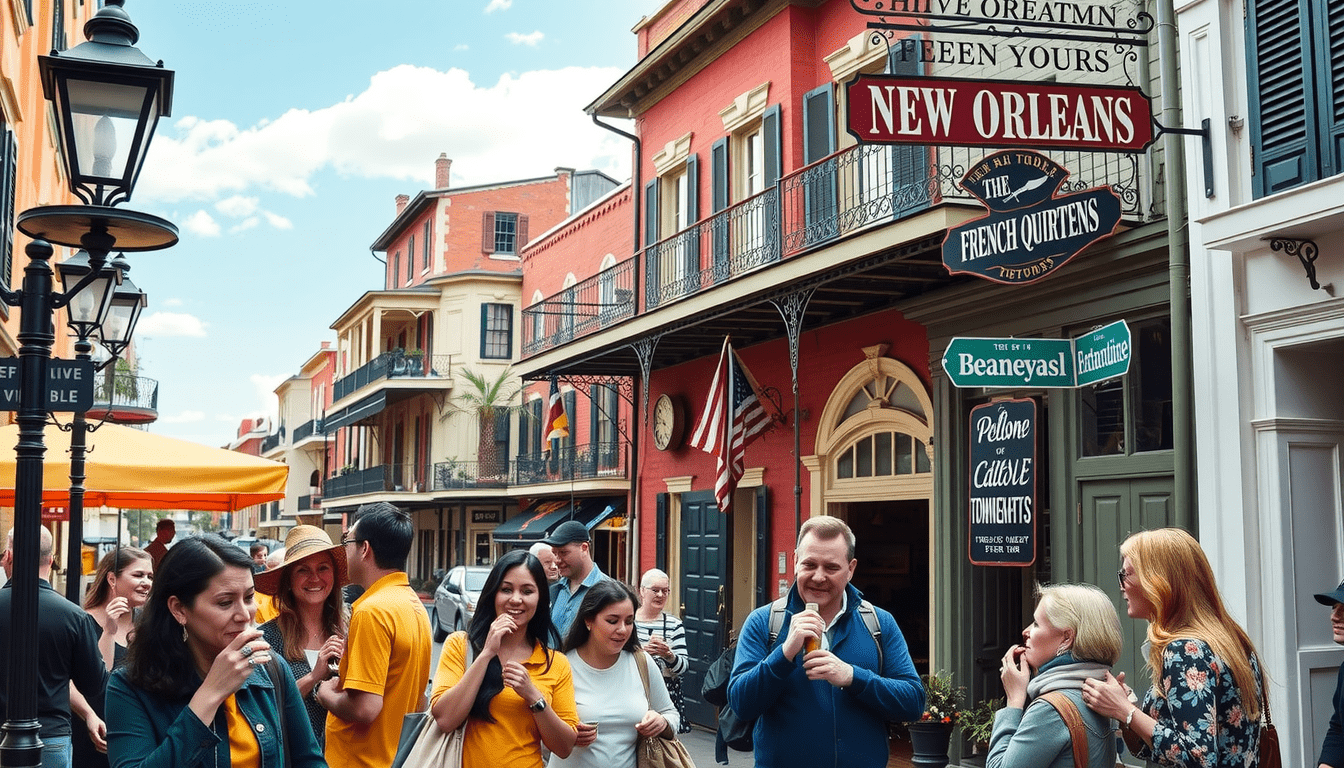


Short Excerpt
- The New Orleans French Quarter Food Adventure combines Creole and Cajun classics, local sweets, optional cocktails, and neighborhood history in one walkable introduction to the city.
- Expect roughly 2.5 to 3 hours, about 1 to 1.5 miles of relaxed walking, and multiple tastings designed to replace a full meal.
- Gumbo, jambalaya, crawfish étouffée, beignets, pralines, and stories of Creole culture make the experience as much about New Orleans history as the food itself.
Quick Take
- The entire tour stays within the French Quarter, making it easy to combine eating with sightseeing.
- Plan for roughly 2.5 to 3 hours and about 1 to 1.5 miles of walking.
- Tastings can include gumbo, jambalaya, crawfish étouffée, beignets, pralines, and other New Orleans favorites.
- Routes can pass Jackson Square, Royal Street, Bourbon Street, hidden courtyards, historic buildings, and jazz-filled streets.
- Small groups and local guides add Creole, Cajun, musical, and neighborhood context that you would miss on a self-guided restaurant crawl.
- Optional cocktails such as a Hurricane or Sazerac may be available depending on the tour package.
Taste the French Quarter Through Creole Flavors, Historic Streets, and New Orleans Stories
The New Orleans French Quarter Food Adventure is a strong fit when you want the city’s food, history, and atmosphere woven into one experience instead of treating them as separate activities.
Over roughly 2.5 to 3 hours, you walk about 1 to 1.5 miles through the French Quarter at a relaxed pace, with frequent restaurant, bakery, and storytelling stops breaking up the route.
The food centers on dishes closely associated with New Orleans.
Creole gumbo can introduce the city’s layered use of roux, spices, seafood, meat, and regional ingredients, while jambalaya brings another version of the rice-based cooking traditions that developed through Louisiana’s cultural mix.
Crawfish étouffée adds a richer seafood-focused dish, and sweeter stops such as pralines or powdered-sugar-covered beignets can balance the savory portions.
Those foods become more meaningful when you understand where they came from.

New Orleans cuisine grew from overlapping Creole, Cajun, African, French, Spanish, Caribbean, and Southern traditions, and a knowledgeable guide can explain how those influences became part of the dishes now associated with the city.
The French Quarter itself becomes part of that story.
You may pass Jackson Square, Royal Street, Bourbon Street, hidden courtyards, old buildings, jazz venues, and streets where several centuries of New Orleans history remain visible within a relatively compact area.
That makes the tour particularly useful for first-time visitors who want orientation as well as food.
Optional cocktail tastings can add another layer.
A Sazerac or Hurricane can connect the experience to New Orleans drinking culture, although alcohol is typically better treated as an enhancement rather than the reason to choose the tour.

The walking commitment is moderate and manageable for many travelers.
New Orleans heat, humidity, rain, uneven sidewalks, and crowded French Quarter streets can still affect how strenuous the outing feels, so comfortable shoes and weather-appropriate clothing matter.
This tour is especially well suited to first-time New Orleans visitors, couples, small groups, history lovers, and travelers who want Creole and Cajun flavors with cultural context.
Someone looking for formal fine dining, almost no walking, or a tour centered entirely on cocktails may prefer a more specialized experience.
What is a Food Tour?
A food tour is more than just a meal—it’s an engaging, guided experience that introduces you to a city’s food scene while weaving in its culture, history, and local charm.
On the New Orleans French Quarter Food Adventure, you’ll explore the oldest neighborhood in New Orleans while sampling iconic dishes and learning about the city’s unique Creole, Cajun, and French influences.
What’s Included:
- A guided walking tour through the French Quarter.
- Multiple food tastings at local restaurants, cafés, and markets.
- Storytelling about New Orleans’ history, culinary traditions, and vibrant culture.
- Insider tips and local recommendations.
Types of Food Tours:
- Walking food tours like this one, focused on a specific district.
- Bus or van tours covering larger neighborhoods.
- Progressive dinner tours with multi-course stops.
- Market tours featuring local vendors and artisan products.
- Chef-led tours with exclusive tasting experiences.
This food tour is a classic walking tour through the French Quarter, blending bold flavors with colorful history and Southern hospitality.
What Makes This Food Tour Special?
The New Orleans French Quarter Food Adventure is not just about food—it’s a journey through the city’s diverse culinary landscape and cultural roots.
Local Dishes & Iconic Eats
On this tour, you’ll sample a mouthwatering lineup of New Orleans’ most famous dishes, including:
- Beignets dusted with powdered sugar
- Classic Creole gumbo
- Jambalaya packed with sausage and spices
- Crawfish étouffée
- Pralines from a local candy shop
- Optional cocktail tastings like the Hurricane or Sazerac
Each stop introduces you to the flavors that define New Orleans’ legendary food scene.
Neighborhoods Explored
The entire tour takes place in the French Quarter, New Orleans’ oldest and most iconic neighborhood.
As you walk, you’ll explore:
- Historic Jackson Square
- Royal Street and Bourbon Street‘s vibrant energy
- Hidden courtyards and jazz-filled alleys
- Historic landmarks and cultural hotspots
Unique Highlights
- Tastings at family-owned restaurants and century-old bakeries
- Stories of Creole and Cajun heritage
- Visits to hidden courtyards and historic buildings
- Optional cocktail tastings and dessert stops
👉 Reserve your spot here:
New Orleans French Quarter Food Adventure on Tripadvisor
How Much Do Food Tours Cost?
Most New Orleans food tours range from $65 to $95 per person, depending on the length and add-ons.
The French Quarter Food Adventure typically falls within this price range and includes:
- Multiple food tastings of New Orleans classics.
- Optional cocktail or dessert pairings.
- A knowledgeable, local guide.
- A walking tour through the historic French Quarter.
Optional upgrades may include:
- Private or VIP tours
- Extended tastings and drink pairings
- Personalized group experiences
🔗 Check availability, pricing, and guest reviews here on Tripadvisor
How Long is the Tour?
The New Orleans French Quarter Food Adventure is designed to be a fun and filling afternoon or evening activity.
Here’s what you can expect:
- Typical Duration: 2.5 to 3 hours
- Shorter Tours Available: 1.5 to 2 hours for express or private options
- Extended Tours: Half-day options available for private bookings
The walking distance is approximately 1 to 1.5 miles, at a slow, easy pace with plenty of food stops and stories along the way.
If you have dietary restrictions, it’s a good idea to notify the tour operator in advance so they can accommodate you.
Do You Need to Book in Advance?
Yes, booking in advance is recommended.
This is one of the most popular New Orleans culinary tours, and spots fill up quickly, especially during weekends, festivals, and high tourist seasons.
It’s best to reserve your spot at least a few days ahead.
Most tours offer free cancellation up to 24 hours before the start time.
Always check the cancellation policy on Viator before booking.
👉 Reserve your tour here:
New Orleans French Quarter Food Adventure on Tripadvisor
What Should You Bring?
To make the most of your French Quarter food tour, bring:
- Comfortable walking shoes—you’ll be strolling through historic streets.
- A hearty appetite—come hungry!
- Weather-appropriate clothing—New Orleans weather can be unpredictable.
- A camera or smartphone to capture food and architecture.
- A water bottle and small bag if needed.
How to Choose the Best Food Tour
Here’s what to look for when selecting the best food tour in New Orleans:
Experienced, local guides:
Guides who share authentic stories and culinary knowledge.
Food variety:
A diverse mix of Creole, Cajun, and New Orleans classics.
Small group size:
A more intimate and interactive experience.
Neighborhood focus:
Tours that showcase one neighborhood’s history and food scene.
Positive guest reviews:
Look for great ratings and feedback from previous guests.
Value for money:
Plenty of tastings, cultural stories, and personalized touches.
The New Orleans French Quarter Food Adventure hits all these marks and is one of the top-rated culinary experiences in the city.
Local Tips & Hidden Gems
One of the best parts of this tour is the insider knowledge and secret spots you’ll discover:
- Your guide will take you to family-owned restaurants and bakeries that many tourists miss.
- You’ll get insider tips on where to find the best beignets, gumbo, and po’ boys beyond the tour.
- Hear stories about the French Quarter’s haunted history, Creole culture, and musical roots.
- Get recommendations on live jazz bars, hidden speakeasies, and dessert spots to visit after the tour.
- Learn when to revisit popular spots to avoid crowds and catch local events or food festivals.
By the end of the tour, you’ll have a full belly and a local’s guide to eating your way through the French Quarter.
What to Expect on a Food Tour
Here’s what your food tour will feel like:
- A fun, relaxed walking tour through New Orleans’ most historic district.
- A variety of delicious tastings from authentic, local eateries.
- Engaging stories about the city’s history, culture, and food scene.
- A small group of fellow food lovers.
- A full and satisfied belly by the end of the tour.
How to Prepare for a Food Tour
To get the most out of your tour:
- Arrive hungry—this tour will replace a meal.
- Wear comfortable walking shoes.
- Dress for the weather and bring essentials like sunscreen, a jacket, or an umbrella.
- Notify the tour operator in advance if you have dietary restrictions.
- Bring a camera to capture your experience.
FAQ – Is the New Orleans French Quarter Food Adventure the Best Way to Taste the City’s Creole and Cajun Roots?
How Long Does the New Orleans French Quarter Food Adventure Last?
The typical tour lasts roughly 2.5 to 3 hours.
That gives you enough time for several substantial tastings, neighborhood stories, and sightseeing without making the experience feel rushed.
Shorter express or private versions may last around 1.5 to 2 hours.
Half-day options can also be available for travelers who want a deeper experience.How Much Walking Is Involved?
Expect roughly 1 to 1.5 miles of walking.
The pace is slow because food stops, historic explanations, and photo opportunities regularly break up the route.
You are not walking continuously for several hours.
Comfortable shoes still matter because French Quarter sidewalks and older streets can be uneven.What Foods Can You Expect to Try?
Possible tastings include beignets, Creole gumbo, jambalaya, crawfish étouffée, pralines, and other New Orleans specialties.
The exact lineup can change depending on the restaurants and bakeries participating that day.
Some stops emphasize savory Creole or Cajun dishes, while others add sweets or regional snacks.
The overall experience is designed to show several sides of New Orleans cuisine rather than concentrate on one dish.Will the Tastings Be Enough for a Full Meal?
Usually, yes.
The tour includes multiple food stops intended to leave you satisfied by the end.
Gumbo, jambalaya, étouffée, pastries, and sweets add up quickly even when each individual serving is smaller than a restaurant entree.
Arriving hungry is generally a better choice than eating a large meal shortly beforehand.What Is the Difference Between Creole and Cajun Food?
Creole and Cajun cooking share ingredients and techniques, but they developed through different cultural and geographic traditions.
Creole cuisine is closely associated with New Orleans and reflects French, Spanish, African, Caribbean, and other influences.
Cajun cooking developed more strongly in rural Louisiana communities and is often associated with hearty one-pot dishes, smoked meats, seafood, and bold seasoning.
A food tour can make those differences easier to understand because you encounter several dishes within the cultural setting where the traditions overlap.Does the Tour Include Gumbo?
Yes, gumbo is one of the signature New Orleans dishes associated with the experience.
Recipes can vary dramatically depending on the cook, with seafood, sausage, chicken, okra, filé, and different styles of roux all potentially shaping the final bowl.
That variation is part of what makes gumbo so closely connected to Louisiana food culture.
A guide can help explain why there is no single universal version.Will You Try Jambalaya or Crawfish Étouffée?
Both dishes can be part of the tasting lineup.
Jambalaya is a seasoned rice dish that can include sausage, chicken, seafood, or combinations of several proteins.
Crawfish étouffée is typically richer and sauce-based, with crawfish served over rice.
Trying them alongside gumbo gives you a better sense of how varied Louisiana’s iconic dishes actually are.Are Beignets and Pralines Included?
They can be.
Beignets bring one of New Orleans’ most recognizable sweet traditions into the tour, while pralines add a candy associated closely with the city’s Creole history.
Those stops also provide a useful break between richer savory dishes.
Exact dessert stops can vary, so individual items should not be treated as guaranteed unless confirmed for your tour.Which Parts of the French Quarter Might You Explore?
Routes can pass Jackson Square, Royal Street, Bourbon Street, historic buildings, hidden courtyards, and smaller side streets.
Because the entire experience stays within the French Quarter, you can see a substantial amount of the neighborhood without long transfers.
The route may also introduce quieter areas that feel very different from Bourbon Street.
That contrast helps show that the French Quarter is much broader than its nightlife reputation.Does the Tour Include New Orleans History and Culture?
Yes.
The food is closely connected to stories about Creole and Cajun heritage, immigration, trade, music, architecture, and the development of the French Quarter.
Guides may also discuss haunted history, jazz traditions, old restaurants, and long-running family businesses.
That storytelling gives the dishes context instead of presenting them as isolated samples.
It is one of the main reasons a guided experience can be more valuable than simply visiting restaurants independently.Are Cocktails Included?
Alcoholic drinks may be offered as optional additions rather than automatically included in every ticket.
Possible tastings can include New Orleans classics such as the Hurricane or Sazerac.
Some tours offer dedicated drink packages or expanded tasting options.
Check the booking details if cocktails are an important part of the experience you want.Is the Tour Family-Friendly?
Yes, the tour can work well for families.
Many of the foods are approachable, and the frequent stops make the walking easier for older children.
History, music, architecture, and busy French Quarter streets also provide plenty to see between tastings.
Parents should still consider tour length, spice tolerance, heat, and attention span when bringing younger children.Can Vegetarian Travelers Join the Tour?
Sometimes.
Beignets, pralines, breads, desserts, and selected restaurant dishes can provide vegetarian possibilities.
Traditional gumbo, jambalaya, and étouffée frequently contain meat, seafood, or animal-based stocks, which can make equivalent substitutions more difficult.
Contact the operator before booking so you know whether the adjusted menu will still provide enough variety.Can Food Allergies Be Accommodated?
Many dietary needs can be addressed when the operator receives advance notice.
Shellfish, dairy, gluten, nuts, seafood, and shared preparation areas can appear frequently across New Orleans dishes.
Small restaurants may have limited ability to eliminate cross-contact completely.
Anyone with a serious allergy should discuss specific ingredients and preparation methods before booking.What Should You Wear and Bring?
Comfortable walking shoes should be your first priority.
New Orleans can be hot and humid for much of the year, so lightweight clothing, water, sunscreen, and a hat can make the walk more comfortable.
A compact umbrella or rain layer is also useful because showers can develop quickly.
Keep what you carry relatively light because you will be moving through restaurants, courtyards, and busy historic streets.Should You Book the French Quarter Food Tour in Advance?
Yes.
Popular departures can fill quickly during weekends, festivals, holidays, and major New Orleans events.
Booking several days ahead gives you a better chance of securing your preferred departure time.
Advance reservations also provide more time to communicate dietary, mobility, or private-group needs.Who Is the New Orleans French Quarter Food Adventure Best Suited For?
The tour is especially well suited to first-time New Orleans visitors, couples, small groups, history lovers, and travelers who want to understand Creole and Cajun food in context.
It works particularly well when you want several signature dishes, French Quarter sightseeing, and cultural storytelling combined into one activity.
Food-focused travelers can also use the tour to identify restaurants, bakeries, bars, and dishes worth revisiting later.
Someone seeking formal fine dining, minimal walking, or a cocktail-centered experience may prefer a more specialized tour.