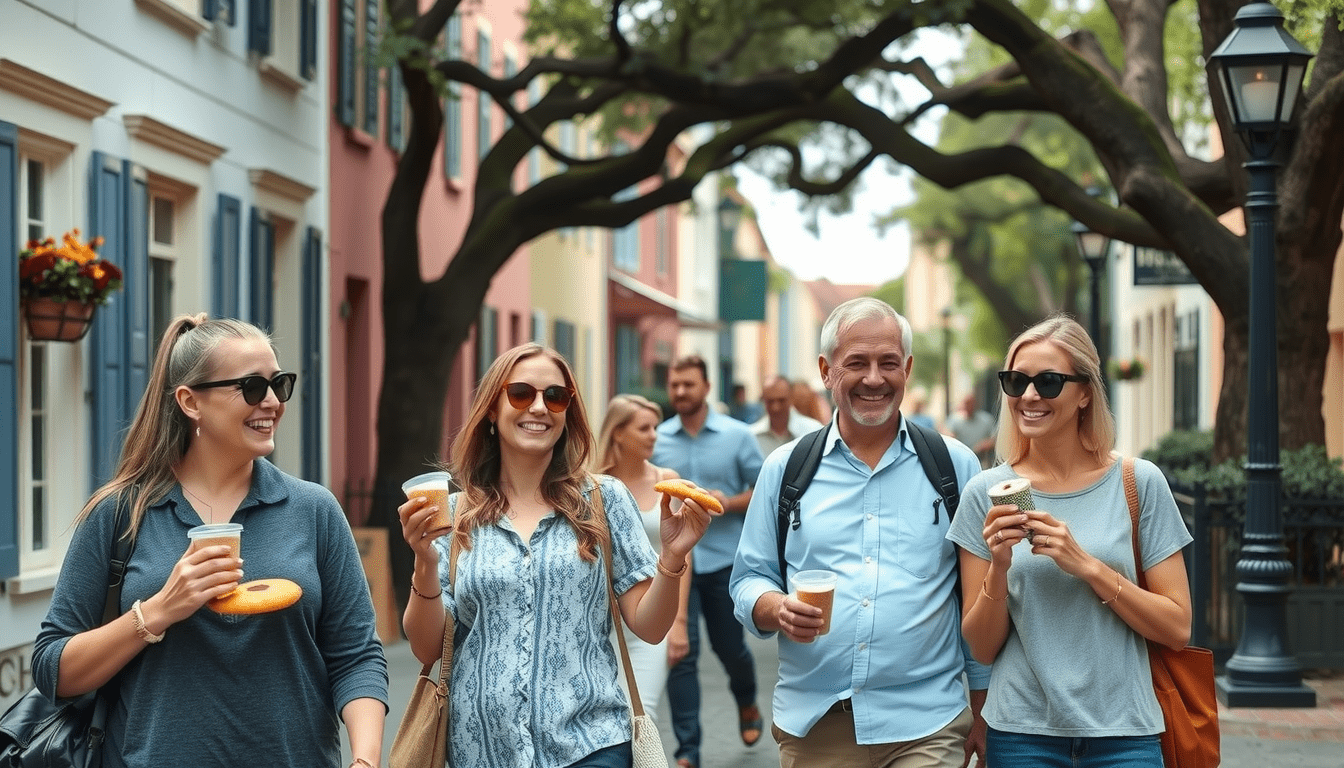


Short Excerpt
- The Charleston Walking Food Tour combines Lowcountry classics, Gullah-Geechee influences, Southern desserts, and historic storytelling through the heart of the city.
- Expect roughly 2.5 to 3 hours, about 1 to 1.5 miles of relaxed walking, and multiple generous tastings that can replace a full meal.
- Shrimp and grits, she-crab soup, fried green tomatoes, hushpuppies, rice dishes, pralines, and benne wafers help connect Charleston’s food directly to its coastal history and culture.
Quick Take
- The tour blends Charleston food with the Historic District, French Quarter, Market Street, King Street, and tucked-away courtyards.
- Plan for roughly 2.5 to 3 hours and about 1 to 1.5 miles of walking.
- Tastings typically add up to a full meal rather than a few small samples.
- Gullah-Geechee traditions and African, Caribbean, French, and Southern influences are central to understanding the city’s food.
- Small groups and local guides add the historical context that makes the experience stronger than simply visiting several restaurants on your own.
Taste the Lowcountry Flavors and Cultural Roots That Tell Charleston’s Story
The Charleston Walking Food Tour works best when you want the food to explain the city rather than simply give you somewhere good to eat.
Over roughly 2.5 to 3 hours, you walk about 1 to 1.5 miles through historic Charleston while stopping at local restaurants, bakeries, and specialty food businesses for enough tastings to generally replace lunch.
The menu can introduce several of the dishes most closely associated with the Lowcountry.
She-crab soup brings together seafood, cream, and a splash of sherry, while shrimp and grits reflects the coastal ingredients that became one of Charleston’s defining combinations.
Fried green tomatoes with pimento cheese, hushpuppies, cornbread, Gullah-inspired rice dishes, pralines, and benne wafers can add very different textures and flavors as the tour progresses.
Those dishes become more meaningful once the cultural connections are explained.

Charleston’s cuisine grew from African, Gullah-Geechee, Caribbean, French, and broader Southern influences, with rice cultivation, seafood, local agriculture, trade, and generations of family cooking all helping shape what eventually became known as Lowcountry food.
The route reinforces that history.
You may move through the French Quarter, Market Street, King Street, hidden courtyards, alleyways, and historic streets where churches, old homes, markets, and restaurants sit within a compact area.
That makes the experience as much a cultural walking tour as a meal.
The physical commitment is relatively manageable.
Frequent tastings and storytelling breaks divide the walking, although Charleston’s cobblestones, uneven surfaces, heat, and humidity can make comfortable shoes and weather-appropriate clothing important.

This tour is especially well suited to first-time Charleston visitors, couples, small groups, history lovers, and travelers who want to understand how the city’s food reflects the people and traditions that shaped it.
Someone looking for formal fine dining, almost no walking, or a narrowly focused tasting devoted to one dish may prefer a different culinary experience.
What is a Food Tour?
A food tour is a guided experience that combines walking, eating, and storytelling.
On the Charleston Walking Food Tour, you’ll visit locally loved restaurants and specialty shops to sample authentic Southern dishes and learn about the culture and people behind them.
What’s Included:
- A guided walking tour through historic Charleston
- Multiple food tastings of local specialties
- Engaging stories about Charleston’s culinary and cultural history
- A local guide’s insider recommendations and hidden gems
Types of Food Tours:
- Walking tours like this one that explore specific neighborhoods
- Bus/van tours that cover larger areas of the city
- Progressive dinner tours with a multi-course format
- Market tours featuring local vendors and artisan producers
- Chef-led tours that offer behind-the-scenes access
What Makes This Food Tour Special?
The Charleston Walking Food Tour is more than just a stroll and a snack—it’s a journey through centuries of flavor, rooted in African, French, Caribbean, and Southern influences.
Local Dishes & Iconic Eats
Sample some of Charleston’s most iconic dishes, including:
- She-crab soup with a splash of sherry
- Fried green tomatoes topped with pimento cheese
- Shrimp and grits—a Lowcountry must-try
- Hushpuppies and cornbread from historic kitchens
- Gullah-inspired rice dishes and stews
- Classic Southern desserts like pralines or benne wafers
Each tasting showcases the deep culinary heritage of Charleston and the local chefs who bring it to life.
Neighborhoods Explored
This walking tour winds through Charleston’s Historic District, including:
- French Quarter with its narrow alleys and colorful façades
- Market Street and nearby local food stalls
- King Street—a mix of old Charleston charm and trendy bites
- Quaint courtyards and hidden gardens off the beaten path
Unique Highlights
- Led by local guides who share personal stories and hidden history
- Tastings from beloved local restaurants and bakeries
- A deeper understanding of Charleston’s Gullah-Geechee food traditions
- Discoveries of secret alleyways and tucked-away eateries
👉 Reserve your spot here:
Charleston Walking Food Tour on Tripadvisor
How Much Do Food Tours Cost?
Most Charleston food tours range from $70 to $95 per person, depending on tour length and what’s included.
The walking culinary tour typically includes:
- Multiple tastings (enough for a full meal)
- A knowledgeable local guide
- Cultural and historical commentary during the walk
Optional upgrades may include:
- Private group experiences
- Drink pairings with cocktails or local brews
- Extended VIP tours with additional stops
🔗 Check the latest prices, availability, and reviews here on Tripadvisor
How Long is the Tour?
- Typical Duration: 2.5 to 3 hours
- Shorter Tours Available: 1.5 to 2 hours for express options
- Extended Tours: Half-day VIP tours for private bookings
The walking distance covers approximately 1 to 1.5 miles, taken at a relaxed pace with frequent stops to eat, learn, and explore.
Notify the operator ahead of time if you have any dietary concerns or accessibility needs.
Do You Need to Book in Advance?
Yes, this is one of the most popular walking culinary tours in Charleston, and spots fill up fast, especially during peak travel seasons.
To ensure your preferred date and time, it’s best to book a few days in advance.
Most tours offer flexible cancellation policies with a full refund if canceled 24 hours or more before the start time.
Always confirm cancellation terms on Tripadvisor when booking.
👉 Reserve your tour here:
Charleston Walking Food Tour on Tripadvisor
What Should You Bring?
To fully enjoy your Charleston food tour, make sure to pack:
- Comfortable walking shoes for cobblestone streets
- A hearty appetite—you’ll be sampling generously
- Weather-appropriate clothing (hat, sunglasses, umbrella, or jacket)
- A camera or phone for photos of beautiful architecture and food
- A refillable water bottle if needed
How to Choose the Best Food Tour
- Experienced, knowledgeable guides who live locally
- Diverse tastings that highlight Charleston’s signature dishes
- Small group sizes for a more personal experience
- Cultural and historical storytelling built into the walk
- Excellent reviews from previous guests
- Plenty of food to satisfy your appetite and curiosity
The Charleston Walking Food Tour meets all these criteria and has earned its place as one of the top-rated food tours in the South.
Local Tips & Hidden Gems
- Your guide will show you hidden alleys and tucked-away courtyards filled with charm and history
- You’ll discover where locals go for shrimp and grits, pralines, and hushpuppies
- Learn about the African roots of Gullah cuisine and its influence on Lowcountry cooking
- Get tips on best places for brunch, rooftop cocktails, and sunset seafood dinners
- Leave with a list of restaurants to revisit and local festivals to check out during your stay
What to Expect on a Food Tour
- A friendly, casual atmosphere with plenty of interaction
- A wide variety of tastings—enough to count as a full meal
- Fascinating stories of Charleston’s food scene and history
- Beautiful photo ops and memorable culinary moments
- A full belly and deeper appreciation of Lowcountry culture
How to Prepare for a Food Tour
- Come hungry
- Dress for the weather
- Wear comfortable shoes
- Bring a camera and water bottle
- Let the guide know in advance if you have any food restrictions
FAQ – How Does a Charleston Food Tour Reveal the Lowcountry Flavors and History Behind the City?
How Long Does the Charleston Walking Food Tour Usually Last?
Most standard tours last about 2.5 to 3 hours.
That gives you enough time for several food stops, neighborhood stories, and historic sights without making the experience feel rushed.
Shorter express versions may run about 1.5 to 2 hours, while private or extended experiences can last longer.
Plan on treating the tour as one of your main activities rather than squeezing it between tightly scheduled attractions.How Much Walking Is Involved?
Expect roughly 1 to 1.5 miles of walking.
The pace is relaxed because food stops, historical stories, and photo opportunities regularly break up the route.
You are not walking continuously for several hours.
Comfortable shoes are still important because cobblestones, brick paths, and older sidewalks can be uneven.What Foods Can You Expect to Try?
Possible tastings include she-crab soup, shrimp and grits, fried green tomatoes with pimento cheese, hushpuppies, cornbread, Gullah-inspired rice dishes, pralines, and benne wafers.
The exact lineup can change depending on the route and participating restaurants.
Some dishes emphasize seafood and Lowcountry traditions, while others introduce classic Southern flavors or desserts.
That variety helps the tour tell a broader Charleston food story instead of focusing on one specialty.Will the Tastings Be Enough for a Full Meal?
Usually, yes.
The tour is designed around multiple substantial tastings rather than a few tiny samples.
The portions build over several stops and can add up to roughly the amount you would eat for lunch.
Arriving hungry is generally a better idea than eating a large meal shortly beforehand.Does the Tour Include Shrimp and Grits?
Many Charleston food tours include shrimp and grits because the dish is closely tied to Lowcountry cooking.
Its combination of coastal seafood and ground corn connects directly to the region’s agricultural and culinary history.
Preparation styles vary between restaurants, so the version you try may reflect the chef’s own interpretation.
A guide can also explain why the dish became such an important symbol of Charleston cuisine.What Is She-Crab Soup?
She-crab soup is a rich Charleston specialty traditionally made with crab, cream, and sherry.
It has become one of the dishes most strongly associated with the city’s historic dining culture.
Modern versions can vary in richness and seasoning.
Trying it as part of a broader food tour helps place the dish within Charleston’s larger coastal and Lowcountry traditions.What Are Gullah-Geechee Food Traditions?
Gullah-Geechee foodways developed through African American communities along the coastal Southeast and are deeply connected to rice, seafood, vegetables, grains, and one-pot cooking traditions.
Those influences helped shape many foods now associated with the Lowcountry.
A Charleston food tour can introduce that history through rice dishes, stews, ingredients, and stories about how culinary traditions survived and evolved.
Understanding those roots gives much more meaning to the food than simply labeling it Southern cuisine.Which Parts of Charleston Might the Tour Explore?
Routes commonly move through the Historic District.
The French Quarter, Market Street, King Street, hidden courtyards, alleyways, and nearby historic blocks may all appear along the way.
Because the area is compact, the tour can combine food stops and sightseeing without requiring long transfers.
That makes it particularly useful for visitors who want to understand central Charleston while also eating.Does the Tour Include Charleston History?
Yes.
Historical and cultural storytelling is a major part of the experience.
Guides may discuss Charleston’s port, architecture, colonial history, African American heritage, Gullah-Geechee traditions, markets, and the evolution of local food.
Those stories help connect each tasting to the neighborhood rather than making the tour feel like a sequence of unrelated restaurants.Are Pralines and Benne Wafers Usually Included?
They can be.
Pralines are one of the South’s better-known sweets, while benne wafers are closely associated with Charleston and the Lowcountry.
Benne, an African word for sesame, also connects the cookie to deeper African culinary traditions in the region.
A dessert stop can therefore add cultural history as well as something sweet at the end of the tour.Can Vegetarian Travelers Join the Charleston Food Tour?
Often, but substitutions can be more limited because seafood and meat appear in several traditional Lowcountry dishes.
Fried green tomatoes, pimento cheese, cornbread, desserts, and some vegetable dishes may provide alternatives.
Not every tasting will necessarily have an equivalent vegetarian replacement.
Contact the operator before booking so you know whether the adjusted menu will still provide enough variety.Can Food Allergies Be Accommodated?
Some dietary needs can be handled with advance notice.
Shellfish, dairy, gluten, nuts, eggs, and shared cooking surfaces can appear across many Charleston specialties.
Smaller restaurants and historic kitchens may have limited ability to prevent cross-contact.
Anyone with a serious allergy should ask specifically about preparation and substitution practices before booking.Is the Charleston Walking Food Tour Family-Friendly?
It can be.
The relatively short walking distance and frequent food stops make the experience manageable for many families.
Older children and teens who enjoy food and history are likely to get the most from the storytelling.
Parents should still consider heat, walking tolerance, appetite, and attention span before choosing a multi-hour tour.What Should You Wear and Bring?
Comfortable walking shoes should be your first priority.
Charleston can be hot and humid, particularly during warmer months, so lightweight clothing, sunscreen, water, and a hat can make the experience more comfortable.
A compact umbrella or light rain layer is useful when showers are possible.
Keep what you carry fairly light because you will be moving between several restaurants and historic streets.Should You Book the Charleston Walking Food Tour in Advance?
Yes.
Popular departures can fill quickly, especially during weekends and peak travel periods.
Booking a few days ahead gives you a better chance of getting the time that fits your itinerary.
Advance reservations also give you more time to discuss dietary, accessibility, or private-group needs.Who Is the Charleston Walking Food Tour Best Suited For?
The tour is especially well suited to first-time Charleston visitors, couples, small groups, history lovers, and travelers interested in Lowcountry food.
It works particularly well when you want shrimp and grits, Southern specialties, Gullah-Geechee heritage, and historic neighborhoods woven into one experience.
Food-focused travelers can also use the tour to discover restaurants and dishes worth revisiting later.
Someone seeking formal fine dining, minimal walking, or a tour devoted entirely to one specialty may prefer a different culinary experience.