

Short Excerpt
- A Manila Street Food Crawl takes you beyond restaurant dining with multiple tastings from street carts, neighborhood vendors, markets, and small local eateries.
- Expect Filipino favorites such as kwek-kwek, isaw, fish balls, siomai, banana cue, turon, grilled squid, noodles, halo-halo, and possibly balut for more adventurous eaters.
- Many guided crawls combine roughly 6–10 tastings with about 2–3 hours of walking and local transportation through food-rich areas such as Tondo and Binondo.
Quick Take
- Come hungry because 6–10 street-food tastings can add up to far more food than the word “samples” suggests.
- Start with approachable favorites such as kwek-kwek, siomai, fish balls, banana cue, or turon before deciding whether you are ready for isaw or balut.
- Tondo and Binondo can expose you to very different sides of Manila, from grilled street snacks and bustling local markets to Chinese-Filipino dishes in the city’s historic Chinatown.
- A local guide can make the experience easier by helping with ordering, vendor selection, unfamiliar ingredients, market etiquette, and navigating crowded streets.
- Some crawls mix walking with a jeepney, tricycle, or other local transportation, making getting around Manila part of the experience.
- Bring cash, comfortable shoes, an open mind, and enough appetite to keep eating when halo-halo or another sweet finish appears near the end.
Eat Manila at Street Level, One Sizzling Skewer and Market Stop at a Time
Manila street food is not a polished tasting-menu experience, and that is exactly what makes it interesting.
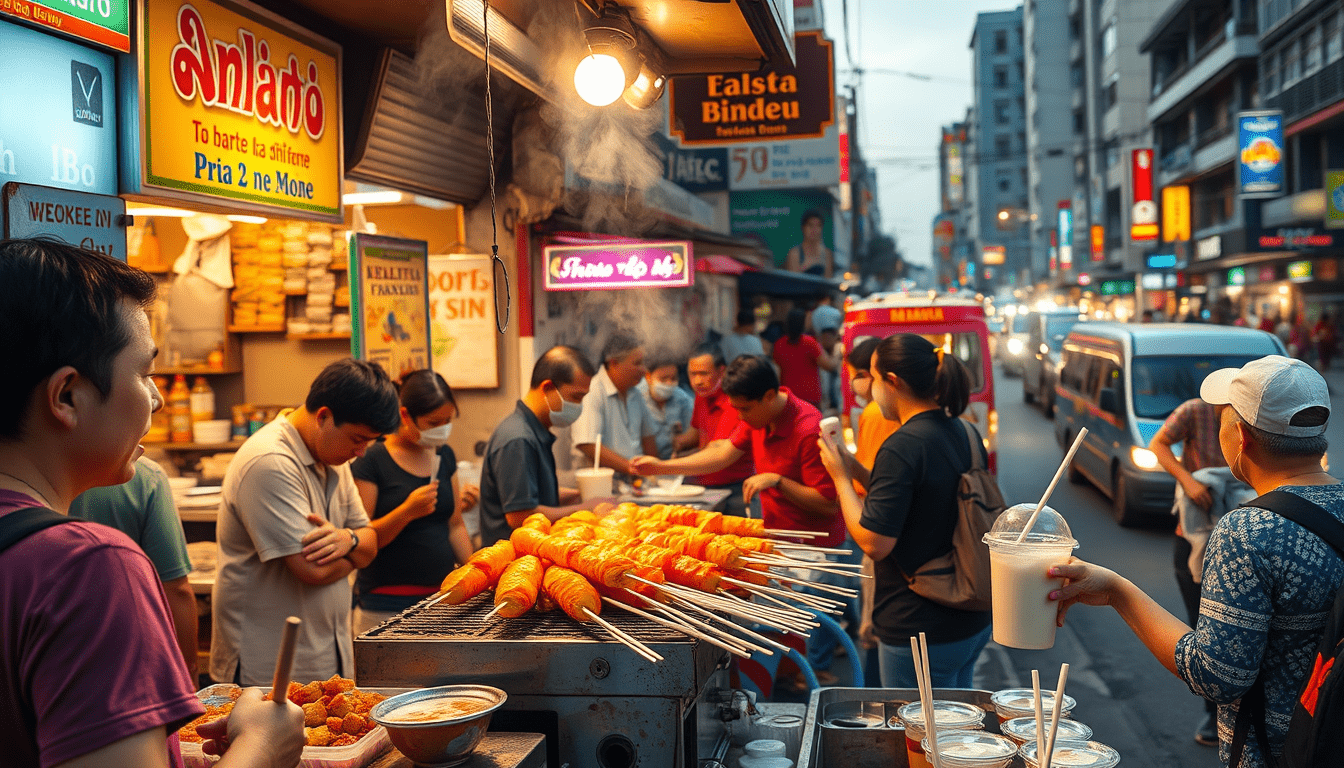
Smoke from charcoal grills drifts across crowded streets, vendors fry snacks to order, jeepneys move through the traffic nearby, and people eat standing beside carts that may have served the neighborhood for years.
A Manila Street Food Crawl gives that energy some structure, typically combining multiple food stops with roughly 2–3 hours of exploring on foot and, on some routes, local transportation.
Depending on the experience, you may work through 6–10 tastings while moving through food-rich areas such as Tondo and Binondo rather than trying to decode Manila’s enormous street-food scene by yourself.
The food can move quickly from easy crowd-pleasers to dishes that test how adventurous you really are.
Kwek-kwek brings crispy orange-battered quail eggs, while fish balls and siomai offer familiar textures before grilled isaw introduces one of the Philippines’ best-known street skewers.

Sweet snacks are just as important to the crawl.
Banana cue coats caramelized bananas in a glossy sugar crust, turon wraps banana and often jackfruit inside a crisp fried wrapper, while halo-halo can end the experience with shaved ice, milk, fruit, jellies, beans, and other colorful additions.
More substantial stops may introduce pancit or palabok noodles, grilled squid, lumpia, sisig, or other Filipino favorites depending on the route and what vendors are serving that day.
Balut may also appear, but trying the fertilized duck egg should be your choice rather than something you feel pressured to do simply because it is famous.
The neighborhoods add as much character as the food.
Tondo gives you a grittier, highly local street-food atmosphere, while nearby Binondo layers Chinese-Filipino cooking and centuries of immigrant history into the experience.

A knowledgeable local guide becomes especially useful when you reach a cart where nothing is labeled in English or several unfamiliar skewers are sitting beside the grill.
Beyond ordering, the guide can explain ingredients, dipping sauces, how dishes are normally eaten, which foods belong to everyday Manila life, and why certain vendors attract locals night after night.
Come hungry and wear comfortable shoes because several hours of eating, walking, crossing busy streets, and occasionally riding local transportation can feel more active than a conventional restaurant meal.
Carrying some Philippine pesos also gives you the freedom to buy another skewer, dessert, drink, or market snack that was not included in your tour.
For first-time Manila visitors, a guided crawl removes much of the uncertainty from trying street food in an unfamiliar city.
More adventurous travelers may value something different: the chance to eat at street level, follow locals into places they would never have chosen on their own, and discover that the most memorable bite of the night may be the one they almost refused to try.
What is a Food Tour?
A food tour is a guided culinary and cultural experience that introduces you to a destination through its local dishes, flavors, and traditions.
In Manila, Philippines, this means walking through dynamic neighborhoods, eating shoulder-to-shoulder with locals, and discovering what makes Filipino street food so unique.
What’s typically included:
- A guided walking tour through food-rich neighborhoods.
- 6–10 tasting stops, including savory, sweet, and spicy Filipino favorites.
- Cultural storytelling from a local expert.
- Drink samplings like sago’t gulaman or calamansi juice.
- Background on local ingredients, food history, and vendor techniques.
Types of food tours in Manila:
- Walking street food crawls in Binondo or Quiapo.
- Progressive dinner tours through modern districts like Poblacion.
- Historic market explorations, including wet markets and street carts.
- Chef-led private tours focused on regional Filipino cuisine.
- Night food tours with drink pairings or karaoke stopovers.
What Makes This Food Tour Special?
The Manila Street Food Crawl gives you direct access to the city’s most beloved, hyperlocal eats.
These are the dishes locals crave at midnight, the snacks schoolkids grow up on, and the comfort foods that define Filipino identity.
Each bite is paired with context—about colonial history, immigrant influence, and native ingenuity.
🍢 Dishes you may try include:
- Isaw – grilled chicken or pork intestines served smoky and chewy.
- Kwek-Kwek – bright orange battered quail eggs, dipped in spiced vinegar.
- Balut – fertilized duck egg with a rich, savory broth.
- Taho – warm tofu topped with arnibal (brown sugar syrup) and sago pearls.
- Banana Cue – caramelized saba bananas fried on skewers.
- Fish Balls & Kikiam – dipped in sweet, spicy, or garlic-laced sauces.
- Pancit Canton or Pancit Palabok – noodle dishes made for sharing.
- Turon – crispy fried banana rolls with jackfruit and sugar glaze.
- Sago’t Gulaman – a sweet drink with jelly and pearls.
- Calamansi Juice – tart and refreshing, made from Filipino citrus.
📍 Neighborhoods explored:
- Binondo (World’s Oldest Chinatown) – fusion of Chinese and Filipino snacks.
- Quiapo – historic heart of Manila, home to soul food and street favorites.
- Poblacion – hipster haven for modern takes on street classics.
- Divisoria & Recto – chaotic but legendary for affordable street eats.
⭐ Unique highlights:
- Learn why balut is more than just a dare—it’s a cultural staple.
- Watch isaw and fish balls grilled to order on open flames.
- Sample vinegar-based dips and hear how flavor balances reflect Filipino cooking.
- Get insider tips on the best stalls, hidden carts, and must-visit vendors.
- Pair your snacks with local beverages, desserts, or even a karaoke stop.
👉 Explore Manila food tours on Tripadvisor
How Much Do Food Tours Cost?
💲 Average price range:
- $25–$45 USD for small-group walking tours.
- $50–$80 USD for private or chef-curated experiences.
- $15–$25 USD for short-format or market-based food tastings.
✅ What’s included:
- 6–10 street food tastings.
- Local drinks or samplers.
- English-speaking guide.
- Cultural history and stories.
- Maps or tips for return visits.
✨ Optional upgrades:
- Hotel pickup/drop-off.
- Souvenir tasting kit or recipe booklet.
- Beverage pairings (beer, calamansi soda, coconut juice).
- Add-on dessert or karaoke stop.
How Long is the Tour?
🕒 Tours typically last 2.5 to 4 hours, depending on number of stops and crowd flow.
🚶♂️ Walking covers 1 to 2 miles, usually through busy but flat streets with food breaks in between.
📣 Let your guide know in advance if you have allergies, dietary needs, or accessibility concerns.
Do You Need to Book in Advance?
Yes—especially for weekend or evening food crawls, which sell out fast.
✅ Why book early:
- Small group sizes (max 8–10 people) ensure a personal experience.
- Some stalls require advanced notice for large groups.
- Your guide may secure special servings or reserved seating.
- Weather backup or customizations take time to arrange.
🔁 Cancellation policy: Most allow full refunds if canceled 24–48 hours before.
What Should You Bring?
🧳 Essentials for your Manila food crawl:
- 🥿 Comfortable walking shoes for street navigation.
- ☀️ Hat or umbrella for sun and tropical rain.
- 📱 Phone or camera for Insta-worthy food shots.
- 💵 Small change (in pesos) for extra snacks or tips.
- 🍽️ An empty stomach and open mind—this is about flavor adventure!
How to Choose the Best Food Tour
✅ Look for local-led tours with strong knowledge of Filipino food culture.
✅ Small group sizes offer better pacing, storytelling, and access.
✅ Prioritize tours with a mix of classic dishes and hidden gems.
✅ Read reviews that highlight guide energy and food authenticity.
✅ Ask if vegetarian or halal-friendly options are available if needed.
Local Tips & Hidden Gems
- Binondo is home to the original lumpia shanghai stall—ask your guide where.
- Don’t skip the vinegar sauces—they define how Filipinos season food.
- Taho vendors roam early in the morning, but some food tours include it as dessert.
- Some of the best kikiam comes from carts that don’t even have names.
- Want more? Ask your guide where to go for late-night tapsilog or halo-halo!
What to Expect on a Food Tour
- Meet your guide at a central spot or near a famous market or church.
- Taste your way through savory, sweet, and quirky bites.
- Get cultural context, food history, and vendor backstories.
- Try dipping sauces, local beverages, and unique flavor pairings.
- Leave with a full stomach and a list of places you’ll want to return to tomorrow.
How to Prepare for a Food Tour
- Eat a light breakfast—this tour is a full meal (and then some).
- Bring water, but save room for sago’t gulaman and street soda.
- Come with curiosity—some dishes look different but taste amazing.
- Ask questions—your guide is your best foodie resource.
- Stay open to trying things you can’t pronounce—this is the fun of it all!
FAQ – How Adventurous Should You Be on a Manila Street Food Crawl?
What Foods Can You Try on a Manila Street Food Crawl?
Expect a mixture of fried snacks, grilled skewers, noodles, sweets, and more substantial Filipino dishes.
Possible tastings include kwek-kwek, fish balls, siomai, isaw, banana cue, turon, grilled squid, pancit, palabok, lumpia, sisig, and halo-halo.
Balut may also appear on some routes for travelers interested in trying one of the Philippines’ most talked-about foods.
Menus can change according to the neighborhood, vendor availability, and what is best that day.Will You Get Enough Food to Replace Dinner?
For many travelers, yes.
A guided crawl can include roughly 6–10 food selections, and several small street-food portions accumulate surprisingly quickly.
Savory snacks, noodles, grilled food, desserts, and drinks can easily turn the experience into a complete meal.
Eat lightly beforehand rather than arriving immediately after lunch or dinner.What Is Kwek-Kwek and Why Should You Try It?
Kwek-kwek is made from quail eggs coated in a bright orange batter and fried until crisp.
It is commonly served with vinegar, a sweet-savory sauce, or another dipping sauce that adds acidity and spice.
The familiar egg filling makes it one of the easier Filipino street foods for first-time visitors to approach.
If you are nervous about unfamiliar dishes, kwek-kwek is a much gentler starting point than balut or grilled intestines.What Is Isaw and Does It Taste as Unusual as It Sounds?
Isaw is grilled chicken or pork intestine, usually skewered and cooked over charcoal before being served with a dipping sauce.
Good preparation gives it a smoky, savory flavor and a slightly chewy texture rather than the extreme experience some travelers imagine.
It remains more adventurous than a dumpling or fried snack, so there is no reason to force yourself if organ meats do not appeal to you.
A food crawl gives you the advantage of trying a small portion instead of ordering an entire serving.Do You Have to Eat Balut on a Manila Food Tour?
No.
Balut is culturally significant Filipino food, but joining a street-food crawl does not mean you need to eat something that makes you uncomfortable.
Travelers who want to try it can benefit from having a guide explain what it is, how locals season it, and the usual way to eat it.
Anyone who would rather skip it can still experience an enormous range of Filipino street food without losing the value of the tour.Which Manila Neighborhoods Can You Explore During a Street Food Crawl?
Tondo and Binondo are particularly interesting because they reveal different layers of Manila’s food culture within a relatively compact part of the city.
Tondo is strongly associated with local markets, grilled street snacks, and busy neighborhood food scenes.
Binondo adds Chinese-Filipino dishes and the culinary traditions of Manila’s historic Chinatown.
Other Manila food experiences may explore Quiapo, Divisoria, Poblacion, or different night-market areas depending on the route.Why Is a Local Guide Useful for Manila Street Food?
A guide removes much of the guesswork from a street-food crawl.
They can help you identify unfamiliar dishes, order from vendors, understand ingredients, choose dipping sauces, and learn how particular foods fit into Filipino culture.
Local knowledge is also valuable when several similar-looking carts are competing for your attention.
Instead of spending the evening wondering what is safe to order or what you are eating, you can concentrate on tasting and understanding it.Does a Manila Street Food Crawl Involve More Than Walking?
Some experiences combine walking with local transportation such as jeepneys, tricycles, or similar short rides.
That allows the route to cover more ground without turning the food crawl into several hours of continuous walking.
The ride can also become part of the cultural experience because local transportation is such a recognizable part of everyday Manila.
Check the individual tour details if accessibility, heat, or the amount of walking will affect your decision.What Should You Bring on a Manila Street Food Tour?
Wear comfortable shoes and lightweight clothing suitable for Manila’s heat and humidity.
Bring some Philippine pesos because small vendors may be easier to pay with cash if you decide to purchase anything beyond the included tastings.
A compact umbrella can be useful during rainy periods, while water and hand sanitizer are practical additions for a street-food evening.
Most importantly, bring enough appetite and curiosity to try several foods rather than filling up at the first stop.Who Will Enjoy a Manila Street Food Crawl Most?
Travelers who want to experience Filipino food beyond hotels, malls, and conventional restaurants are the strongest fit.
First-time visitors benefit from having someone guide them through unfamiliar dishes and busy neighborhoods instead of trying to build a street-food route from scratch.
Adventurous eaters can push further into isaw, balut, unusual skewers, and regional specialties, while less daring travelers still have plenty of approachable choices.
If smoky grills, crowded markets, local transportation, unfamiliar flavors, and eating where Manila residents actually eat sound exciting, a street-food crawl can become one of the most memorable meals of the trip.
If you’re hungry for authenticity, bold flavors, and a taste of local life, the Manila Street Food Crawl will serve up everything you’re craving—and a few surprises you’ll never forget.
👉 Tripadvisor – Manila Food Tours